China’s growing pet community is paying closer attention to daily movement, weight control, and emotional wellbeing. This guide explores the Best Ways To Improve Pet Activity Levels through practical, safe, and realistic habits. Healthy activity is not only about running farther. It also includes climbing, sniffing, stretching, playing, and exploring.
Dr. Ernie Ward, DVM, a leading veterinary expert and founder of the Association for Pet Obesity Prevention, says, “Exercise is medicine for pets.” His view reflects a central veterinary principle: regular movement can support muscle strength, joint health, digestion, sleep, and mental stimulation. A ten-minute indoor play session may help a small dog. A food puzzle may challenge a curious cat. Even a slow evening walk can create valuable sensory enrichment.
The best routine depends on age, breed, body condition, temperament, and medical history. Puppies may need short, gentle sessions. Older pets may benefit from controlled walking and soft surfaces. Overexertion is a real risk. Panting, limping, hiding, or unusual tiredness should never be ignored.
Some owners expect immediate results. That expectation needs reconsideration. A pet may reject a new toy, dislike crowded parks, or move slowly during the first week. Progress can look modest. One extra lap around the room still matters.
This article presents ten evidence-informed methods for improving activity safely. It also considers home environments, weather, motivation, supervision, and veterinary guidance. Small changes often become lasting routines when pets feel secure, interested, and physically comfortable.
The starting point is not speed or endurance. It is body condition. The Association for Pet Obesity Prevention reported that 59% of dogs and 61% of cats were overweight or obese. These figures make activity planning more urgent. They also reveal an uncomfortable gap between perceived fitness and clinical reality.
A veterinary examination should check joints, breathing, heart health, and pain. Then record body weight and body-condition score. Measure meals, limit uncounted treats, and use a feeding diary. Add short walks, gentle fetch, scent games, and supervised play. For cats, climbing shelves, wand games, and food puzzles can encourage natural movement. Increase duration slowly, especially after months of inactivity. Watch breathing, posture, recovery time, and reluctance to move.
Progress needs evidence. Weigh the pet every two to four weeks, using the same scale when possible. Photographing body shape can help, although photos may mislead. I have seen owners confuse excitement with fitness. That mistake deserves reflection. World Small Animal Veterinary Association guidance supports individualized nutrition and body-condition monitoring, rather than guessing from appearance alone. Stop when movement becomes painful, breathing stays heavy, or coordination changes. A smaller daily target is often safer than one exhausting weekend session. Age, breed, medical history, and household routines should shape the plan.
In China, activity plans should start with body condition, not a generic step target. WSAVA’s nine-point Body Condition Score uses sight and touch to assess fat cover. A score of 5 usually represents ideal condition. Ribs should be easy to feel, with a visible waist behind the ribs. Scores of 6 or 7 suggest excess fat. Scores of 8 or 9 indicate severe excess. The scale is practical. It is not a diagnosis.
The 2022 U.S. Pet Obesity Prevalence Survey estimated that 59% of dogs were overweight or obese. It reported the same concern for 61% of cats. These figures show why exercise goals need weight context. A heavier dog may tire quickly on hot pavement. A lean cat may need play, not calorie restriction. WSAVA guidance notes that each BCS point above 5 may represent roughly 10–15% excess body weight.
Set one weekly goal. Try two five-minute play sessions, then adjust slowly. Record BCS, waist shape, breathing, and recovery time. Recheck every two to four weeks with a veterinary professional. A home scale can reveal trends, but it cannot replace an examination. I would question any plan promising rapid change. Some pets need rest days. Some owners overestimate activity. That is easy to miss.
China Top 10 Best Ways To Improve Pet Activity Levels?
Daily movement works best when it feels natural, not forced. In Chinese cities, a 15-minute morning walk can fit beside a busy schedule. Let your dog sniff tree roots, walls, and quiet corners. Sniffing uses the brain and may reduce restless behaviour. Add gentle play after returning home. A soft toy, hallway retrieve, or short tug game can raise activity without needing a large yard. I once treated a tired dog as lazy. That was unfair; pain, heat, or excess weight may explain low energy.
Training also creates useful movement. Ask for sit, touch, wait, and find-it exercises. Use small food portions, then reduce meals accordingly. Rotate climbing, crawling, and puzzle activities, but avoid slippery floors. The Association for Pet Obesity Prevention estimated that 59% of dogs and 61% of cats were overweight or obese in 2022. Weight changes should therefore be monitored with a veterinarian, using body-condition scoring rather than appearance alone. Cats may prefer three-minute chase sessions, elevated resting areas, and safe window observation. My first plan was too ambitious. Shorter sessions worked better.
Tips: Start with five minutes and increase slowly. Change routes weekly. Hide a few treats under cups for supervised searching. Stop if your pet pants heavily, limps, hides, or loses interest. Avoid intense exercise during hot weather. The 2021 AAHA Nutrition and Weight Management Guidelines support individualized plans, because age, breed, health, and body condition all matter. Track duration, mood, and recovery for seven days.
Build daily movement through walks, play, training, and sniffing activities
The chart shows practical example minutes of daily activity for a healthy adult dog. These are planning targets rather than universal medical requirements; adjust duration and intensity for age, breed, size, fitness, weather, and health conditions. Short sniffing, training, and food-puzzle sessions can provide meaningful mental enrichment alongside physical exercise.
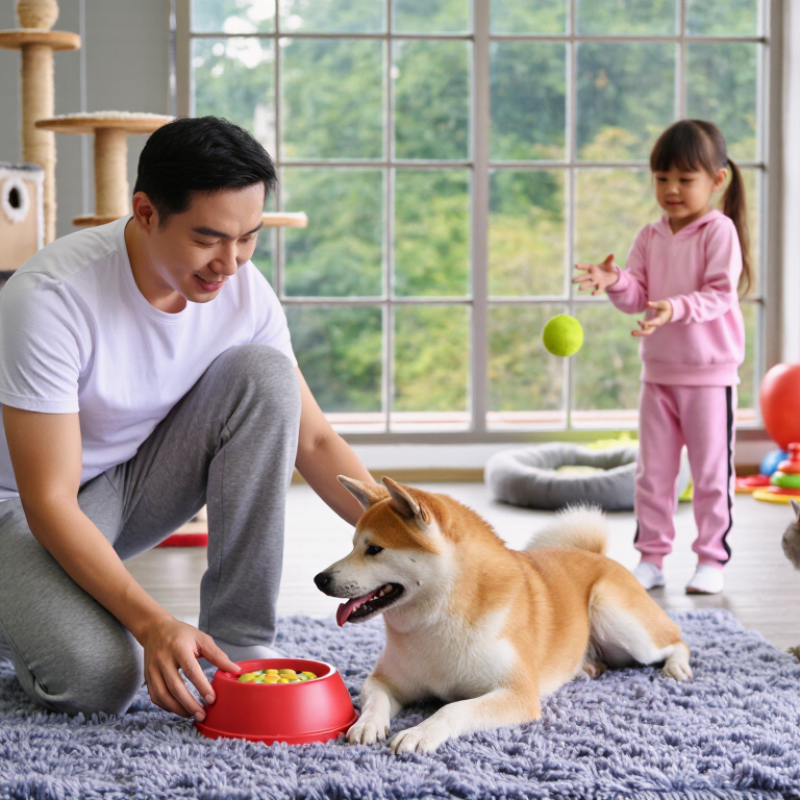
Food puzzles can turn an ordinary meal into a gentle workout. Place small portions inside different compartments, then let your pet sniff and solve. Begin with an easy design. Frustration can reduce interest quickly. For cats, hiding puzzles near a window or scratching area may encourage natural searching. For dogs, a treat-search mat can add movement without forcing intense exercise. Always use safe, pet-sized pieces and supervise the first sessions.
Tips: Change the puzzle every few days. Watch your pet’s body language. Stop if they paw aggressively, vocalize constantly, or abandon the activity. Clean food toys regularly, especially after wet meals. A useful routine might include five minutes before breakfast and another session in the evening.
Interactive toys should invite chasing, batting, pushing, or carrying. Rotate several types instead of leaving everything available. A moving toy can be exciting, but some pets need slower play.
Social exercise also matters. Short training games, gentle fetch, or supervised play with a familiar animal can support confidence and mobility.
Match the activity to age, breed, temperament, and health. A senior pet may prefer soft floor games over jumping.
I have seen owners increase activity too quickly, then mistake tiredness for success. That approach needs reconsideration. Ask a veterinarian about pain, weight changes, or unusual fatigue before changing exercise significantly.
Pet activity should be measured weekly, not guessed from one energetic afternoon. A simple notebook can record walking minutes, play intensity, appetite, sleep, and recovery. Short notes reveal change. For example, a dog that needs two days to recover after a long walk may be overexercising. Reduce the duration, then increase it slowly when normal movement returns. Interactive toys, scent games, and gentle indoor training can also raise activity without forcing long walks.
Age and health should guide every adjustment.
Puppies need controlled play because growing joints are still developing.
Older pets may benefit from several short walks on flat ground.
Pets with heart, joint, breathing, or weight concerns need veterinary advice before increasing exercise.
Watch for limping, heavy panting, weakness, coughing, or unusual reluctance.
These signs deserve attention, not encouragement.
I have learned that more activity
is not always better; my earlier plans sometimes ignored recovery time.
Weather can change a safe routine quickly. During hot Chinese summers, walk near sunrise or after sunset, and check warm pavement with your hand. Humid air may make breathing harder. On polluted days, follow local air-quality alerts and replace outdoor exercise with indoor scent trails or slow obedience practice. Adapt the plan each week. A five-minute game may be wiser than a thirty-minute walk. Water, shade, and frequent pauses matter, though every pet responds differently.
Body condition shows whether activity should increase, decrease, or stay gentle. Appearance alone can mislead. A veterinary check is safer.
Feel the ribs and observe the waist behind them. Ribs should be easy to feel. A professional assessment remains more reliable.
A score of 5 generally indicates ideal condition. Scores of 6 or 7 may suggest excess fat. Scores of 8 or 9 suggest severe excess.
Start with short, gentle walks or five-minute play sessions. Choose flat ground and avoid hot pavement. Increase time slowly.
Try climbing shelves, wand games, food puzzles, and short hunting-style play. Use safe spaces. Do not force tired movement.
Record activity, appetite, sleep, breathing, and recovery each week. Weigh the pet every two to four weeks. Use the same scale when possible.
Stop if movement becomes painful, breathing stays heavy, or coordination changes. Limping, coughing, weakness, and unusual reluctance also matter. Do not push harder.
Puppies need controlled play because their joints are developing. Older pets may prefer several short walks. In hot weather, walk near sunrise or sunset.
Replace outdoor walks with indoor scent trails, gentle training, or slow games. Provide water and pauses. A five-minute game may be wiser.
No. Pets with heart, joint, breathing, or weight concerns need professional guidance. I once underestimated recovery time. That mistake deserves review.
Improving a pet’s activity level starts with understanding its current fitness. Since studies suggest that about 59% of dogs and 61% of cats are overweight, owners should first evaluate body shape, mobility, and daily habits. Use a simple nine-point body-condition scale to set realistic, individual goals rather than expecting every pet to follow the same routine. The Best Ways To Improve Pet Activity Levels include short walks, active play, basic training, and scent-based games that encourage natural movement and mental engagement.
Daily enrichment can also come from food puzzles, interactive toys, gentle social exercise, and varied activities that prevent boredom. Track progress each week by observing weight, energy, movement, and enjoyment, then adjust the plan as needed. Age, health conditions, temperature, and air quality should always guide exercise intensity and duration. With patience, consistency, and positive encouragement, pets can become more active, healthier, and mentally stimulated without overwhelming them.

Creative Pet Toys