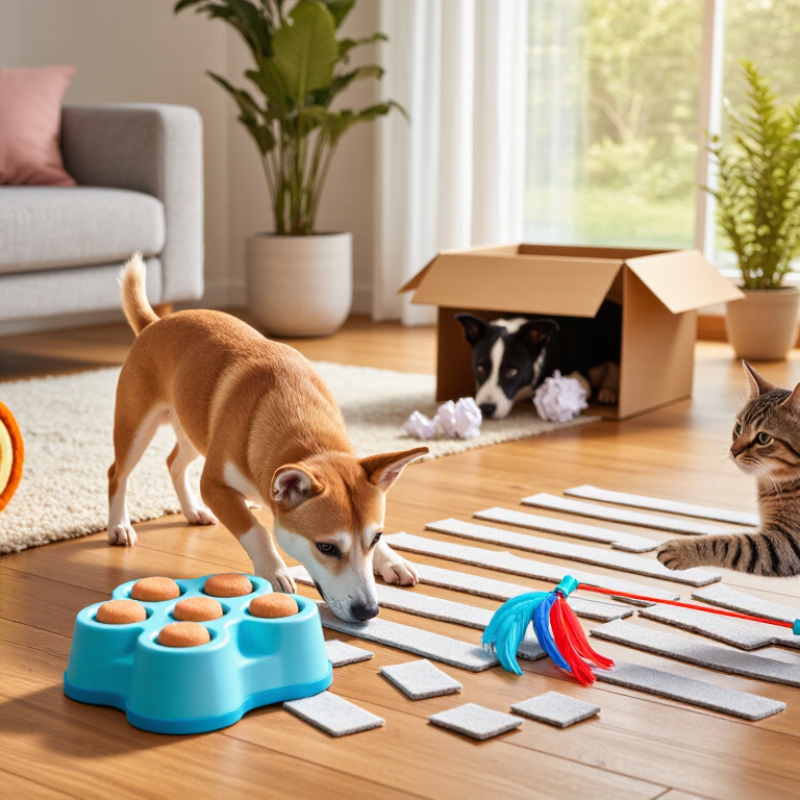
Mental stimulation is not a luxury for pets. It supports curiosity, problem-solving, movement, and calmer daily behavior. A treat puzzle can turn a quiet afternoon into a focused search. A snuffle mat can make ordinary feeding feel like natural foraging. Even a cardboard box may become a rewarding exploration space.
The right Best Pet Toys For Mental Stimulation should match an animal’s species, age, personality, and physical ability. Dr. Patricia McConnell, an applied animal behaviorist, often reminds owners, “Dogs need jobs.” That idea also applies to cats, rabbits, and other companion animals. A puzzle feeder may suit a food-motivated dog, while a wand toy may better engage a stalking-oriented cat. Rotating toys can preserve interest, but too many choices may create clutter instead of enrichment.
Safety still matters. Inspect seams, remove loose parts, and supervise unfamiliar toys. A clever toy is not automatically a safe toy. Some pets solve puzzles quickly, while others need simpler designs and patient guidance. That difference is easy to overlook. This guide explores ten practical options, including treat dispensers, interactive balls, hide-and-seek toys, and scent-based activities. It considers durability, cleaning, engagement, and value. No toy replaces exercise, training, social contact, or veterinary care. Some recommendations may fail for certain pets, and that is normal. Watch the animal’s body language, adjust the difficulty, and learn from what happens. The best choice is not always the most expensive one. It is the toy that encourages safe, voluntary, repeatable engagement.
Understanding Mental Stimulation and Its Benefits for Pets
Mental stimulation gives pets meaningful problems to solve, not just objects to chase. A food puzzle can make a dog sniff, pause, and choose between two openings. A rotating toy can encourage a cat to stalk, tap, and investigate. These small actions support natural behaviors and may reduce boredom-related chewing, pacing, or excessive vocalization.
The 2023–2024 APPA National Pet Owners Survey reported that 66% of U.S. households owned a pet, including about 65.1 million dogs and 46.5 million cats. This scale makes enrichment more than a trend. It is part of responsible daily care. Veterinary behavior guidance also emphasizes choice, novelty, and opportunities to forage. Yet every pet responds differently. Some dogs quit after one difficult puzzle. Some cats prefer a cardboard box to an expensive-looking toy. That matters.
Try short sessions of five to ten minutes. Hide a few treats under paper cups, rotate safe objects, or use a slow-feeding activity. Watch body language closely. A relaxed mouth, curious sniffing, and steady engagement suggest an appropriate challenge. Flattened ears, frantic scratching, or walking away signal too much difficulty. I have seen owners add complexity too quickly. More stimulation is not always better. The goal is thoughtful engagement, with room for the pet to succeed.
Interactive play can encourage problem-solving, sensory exploration, foraging, and independent engagement. The scores below are an editorial 1–10 enrichment scale based on the number and complexity of cognitive tasks each toy type can provide; they are not clinical measurements.
How to use this chart: Rotate toy types and adjust difficulty gradually. Always supervise pets with toys that contain small, removable, or chewable parts, and choose options appropriate for the animal’s size and play style.
Effective mental stimulation toys should make pets think, move, and make choices.
The American Pet Products Association’s 2023–2024 National Pet Owners Survey reports that 66% of U.S. households own a pet. That scale makes enrichment quality important, not decorative. Choose toys with adjustable difficulty, clear feedback, and species-appropriate textures.
A treat puzzle should release food after gentle pushing, lifting, or sliding.
Start easy. Increase the challenge slowly.
Safety comes before novelty.
Look for tightly joined parts, washable surfaces, and materials that resist chewing. Avoid loose strings, sharp edges, and pieces small enough to swallow. Watch the paws. Supervision helps reveal frustration, guarding, or destructive chewing.
The PDSA Animal Wellbeing Report 2024 estimates that 53% of UK adults own a pet, yet access to enrichment can differ widely between homes.
Simple cardboard search games can still support scent work when used safely.
Rotating two or three toy types can prevent boredom.
Food-based puzzles, scent mats, and chase toys exercise different skills.
A toy that excites one cat may overwhelm another.
I have learned that “interactive” does not always mean mentally useful. Some pets solve a puzzle once, then ignore it. That failure is useful evidence.
Record engagement, time spent, and stress signals, then adjust the toy, timing, or reward.
Consult a qualified veterinarian or behaviour professional when sudden disinterest appears.
Cognitive enrichment toys give pets meaningful problems to solve. Puzzle feeders, treat-dispensing balls, and sliding compartments encourage sniffing, paw control, and memory. A dog may nudge a ball across the floor, pause, then try a different angle. Cats often prefer toys that imitate stalking, such as hidden-feather puzzles or moving objects. These activities can reduce boredom, but they are not a complete substitute for exercise, social contact, or veterinary care.
The best toy matches the animal’s age, size, temperament, and problem-solving ability. Start with an easy challenge and watch closely. If a pet bites aggressively, gives up, or becomes tense, the toy may be too difficult or unsuitable. I have sometimes increased difficulty too quickly, which made enrichment feel like frustration. That mistake is useful to remember. Rotate several safe toys instead of offering everything at once. Inspect seams, loose parts, and damaged surfaces before each session.
Use small food portions to prevent overfeeding. Let your pet watch once before expecting independent play. Hide a toy under a towel for supervised scent work. Keep sessions brief, around ten minutes, and end while interest remains. Wash food-based toys regularly, especially after moist treats. Never assume a “smart” toy suits every pet. Observe, adjust, and learn from the response.
Mental stimulation should match your pet’s body, age, and confidence. A young, energetic dog may enjoy a treat puzzle, rolling dispenser, snuffle mat, or scent box. An older dog might prefer a simple food maze with larger openings. Difficulty matters.
For cats, try a feather wand, track ball, puzzle feeder, crinkle tunnel, or hide-and-seek toy. Short play sessions often work better than long ones. Watch your pet’s behavior closely. If they bite, paw, or stare without progress, the toy may be too difficult. If they finish instantly, add a small challenge.
Safety comes before clever design. Choose durable materials that suit your pet’s chewing strength. Avoid loose threads, tiny parts, and damaged surfaces. Supervise new toys, especially with strong chewers. A veterinarian or qualified animal behavior professional can help when anxiety, pain, or unusual frustration affects play.
In my experience, rotating three or four toys keeps interest higher than offering ten at once. Still, I sometimes overestimate a pet’s patience. A toy that seems perfect to me may be ignored within minutes. Observe preferences instead of forcing engagement. Gentle praise, measured rewards, and regular breaks can build confidence while keeping play mentally useful.
Mental stimulation toys work best when safety remains the priority. The American Pet Products Association’s 2023–2024 National Pet Owners Survey estimates that 66% of U.S. households own a pet. That scale makes everyday toy safety a practical concern, not a minor detail. Choose toys that match the animal’s size, chewing strength, age, and habits. A puzzle feeder may suit a careful cat but frustrate a powerful chewer. Watch closely during the first session. Look for torn seams, loose strings, cracked plastic, or pieces small enough to swallow. Remove the toy immediately when damage appears.
Supervision should be active, not merely nearby. Sit where you can see the pet’s mouth and paws. Avoid leaving ropes, balls, or stuffed toys unattended, especially with pets that shred fabric quickly. The UK Pet Food 2024 Pet Population Survey reports that millions of UK households live with pets, reinforcing the need for consistent home routines. Wash food-dispensing toys after each use, then dry them fully to reduce residue and microbial growth. Clean fabric toys according to their care instructions, and inspect hidden folds. Some toys cannot be cleaned well enough after repeated use. Replace them.
Toy rotation can reduce boredom without increasing clutter. Keep only a few items available, and store the rest in a dry container. I sometimes overestimate a toy’s durability. That is a useful reminder: observe the individual pet, not just the product label. When swallowing, choking, vomiting, or unusual tiredness occurs, stop play and contact a veterinarian promptly.
| # | Pet Toy Type | Activity Type | Mental Stimulation Benefit | Key Safety Considerations | Recommended Supervision | Cleaning and Maintenance | Best For |
|---|---|---|---|---|---|---|---|
| 1 | Treat-Dispensing Puzzle Ball | Food puzzle and rolling | Encourages problem-solving, persistence, scent use, and controlled foraging. | Use treats that fit securely. Avoid pieces small enough to become a choking hazard. Choose a size that cannot be swallowed. | Initial and periodic supervision; increase oversight for enthusiastic chewers. | Empty after use, wash according to the material instructions, and check openings for cracks or sharp edges. | Dogs and cats that enjoy food-based enrichment. |
| 2 | Interactive Treat Puzzle Board | Sliding, lifting, and searching | Builds memory, hand-to-paw or nose coordination, and flexible thinking. | Select a difficulty level the pet can manage. Remove loose parts if they are chewed or carried away. | Direct supervision is recommended, especially during the first sessions. | Remove food residue promptly, hand-wash removable pieces, and dry completely before storage. | Dogs and cats that enjoy structured challenges. |
| 3 | Snuffle Mat | Scent-based foraging | Uses the pet’s natural sniffing behavior and can slow down treat consumption. | Do not allow persistent fabric chewing or ingestion. Keep the mat flat to reduce tripping and entanglement risks. | Supervise every use until safe behavior is established; inspect frequently for loose threads. | Shake out crumbs, wash regularly, and dry thoroughly to prevent odors and microbial growth. | Dogs, particularly scent-oriented or food-motivated dogs. |
| 4 | Electronic Motion Toy | Chasing and tracking | Promotes visual tracking, attention, and short bursts of active problem-solving. | Secure battery compartments. Keep cords, charging components, and small detachable parts away from pets. | Active supervision is advised because moving parts and batteries can be hazardous if damaged. | Wipe the exterior, remove fur from moving parts, recharge safely, and replace damaged components. | Indoor cats and dogs interested in moving objects. |
| 5 | Feather Wand Toy | Interactive chase and pounce | Supports hunting-sequence behaviors, timing, agility, and focused attention. | Never leave strings, feathers, or attachments available for unsupervised play. Avoid wrapping the line around the pet. | Constant supervision; store out of reach immediately after play. | Inspect the line, handle, and attachment after every session. Replace the toy when parts become loose. | Cats and other pets that enjoy interactive movement. |
| 6 | Suction-Cup Lick Mat | Licking and calming enrichment | Provides repetitive licking activity and encourages focused engagement with a textured surface. | Use pet-safe foods in moderate quantities. Monitor pets with dietary restrictions or a history of swallowing non-food items. | Supervise the first uses and any session involving frozen food or a strong chewer. | Wash grooves thoroughly after each use and inspect suction cups and edges for damage. | Dogs and cats that respond well to licking enrichment. |
| 7 | Durable Rubber Fillable Toy | Chewing and food extraction | Combines chewing, persistence, and problem-solving while extending treat engagement. | Choose the correct size and a suitable firmness. No toy is indestructible; remove it when pieces break away. | Supervise chewing, particularly for powerful chewers and pets new to the toy. | Wash the interior and exterior, remove trapped food, and inspect for splits, chunks, or rough edges. | Dogs that enjoy chewing and food-stuffed enrichment. |
| 8 | Hide-and-Seek Plush Toy | Searching and retrieving | Encourages scent discrimination, object searching, and independent exploration. | Remove small inserts if the pet tears open the fabric. Do not use plush toys with exposed stuffing or squeakers. | Supervise closely with pets that dissect or ingest fabric and stuffing. | Wash according to care instructions, dry fully, and repair or discard damaged parts promptly. | Gentle chewers and pets that enjoy searching games. |
| 9 | Puzzle Feeder or Slow-Feeding Bowl | Meal-based problem-solving | Turns mealtime into a controlled challenge and supports natural foraging behavior. | Ensure the pet can access food without excessive frustration. Stop use if the pet shows distress or damages the feeder. | Observe initial meals and monitor eating speed, frustration, and resource-guarding behavior. | Wash after each meal when possible, clear narrow channels, and check for cracks or worn surfaces. | Pets that eat quickly or benefit from slower feeding. |
| 10 | Textured Ball or Treat-Release Cube | Rolling, chasing, and manipulation | Promotes coordination, cause-and-effect learning, and active engagement with movement. | Use a ball larger than the pet’s throat and avoid toys with easily detached knobs or pieces. | Periodic supervision is suitable for calm players; use continuous supervision for chewers. | Rinse or wipe after use, remove debris from textured areas, and replace it if the surface splits. | Dogs and cats that enjoy rolling and chasing toys. |
Safety reminder: Select toys according to the pet’s size, age, chewing style, and health needs. Inspect every toy regularly and remove it immediately if it becomes damaged or if any part can be swallowed.
It gives pets small problems to solve, not only objects to chase. A dog may sniff, pause, and choose between openings.
It supports natural behaviors like foraging, stalking, tapping, and investigating. It may also reduce boredom-related chewing, pacing, or excessive vocalization.
Start with five to ten minutes. Short sessions often work better than long ones, especially for cats or easily frustrated pets.
Flattened ears, frantic scratching, or walking away may signal excessive difficulty. A pet that stares without progress may need an easier design.
Match the toy to your pet’s age, body, chewing strength, and confidence. Older dogs may prefer wider openings and simpler food paths.
Try a feather wand, track ball, puzzle feeder, crinkle tunnel, or hide-and-seek toy. A plain cardboard box might win.
Rotate three or four safe toys instead of offering everything at once. Replace damaged items and change activities occasionally.
Avoid loose threads, tiny parts, and cracked surfaces. Supervise new toys, especially when your pet chews strongly.
Add only a small challenge, such as covering one opening. More difficulty is not always better.
Do not force engagement. I sometimes overestimate a toy’s appeal; observe preferences and allow breaks.
Mental stimulation is essential for pets because it supports learning, reduces boredom, and encourages healthy emotional and physical behavior. The Best Pet Toys For Mental Stimulation should invite pets to think, explore, solve problems, or use their natural instincts in a safe and enjoyable way. Effective options may include treat puzzles, interactive feeders, scent-based games, durable chew toys, activity mats, and toys that encourage movement or gentle problem-solving. The best choice depends on a pet’s species, age, size, energy level, intelligence, and individual preferences.
When selecting a toy, choose an appropriate difficulty level and introduce new activities gradually so the pet does not become frustrated. Toys should be made from safe, durable materials and checked regularly for loose parts, sharp edges, or damage. Supervision is especially important during early use and with pets that chew aggressively. Rotating several suitable toys can maintain interest, while regular cleaning helps support hygiene and extends their usefulness.

Creative Pet Toys