In homes with two or more pets, playtime can quickly become noisy, crowded, and difficult to manage. A dog may chase a ball while a cat watches from the sofa. Another pet may hide beneath the table. These small moments reveal why shared play needs planning, not luck.
The American Pet Products Association’s 2023–2024 National Pet Owners Survey reports that 66% of U.S. households own a pet, representing about 86.9 million homes. As pet ownership grows, many families are managing different species, ages, energy levels, and temperaments together. The American Veterinary Society of Animal Behavior recommends reward-based methods and careful observation rather than forced interaction. The American Association of Feline Practitioners also emphasizes safe spaces, separated resources, and opportunities for natural behaviors.
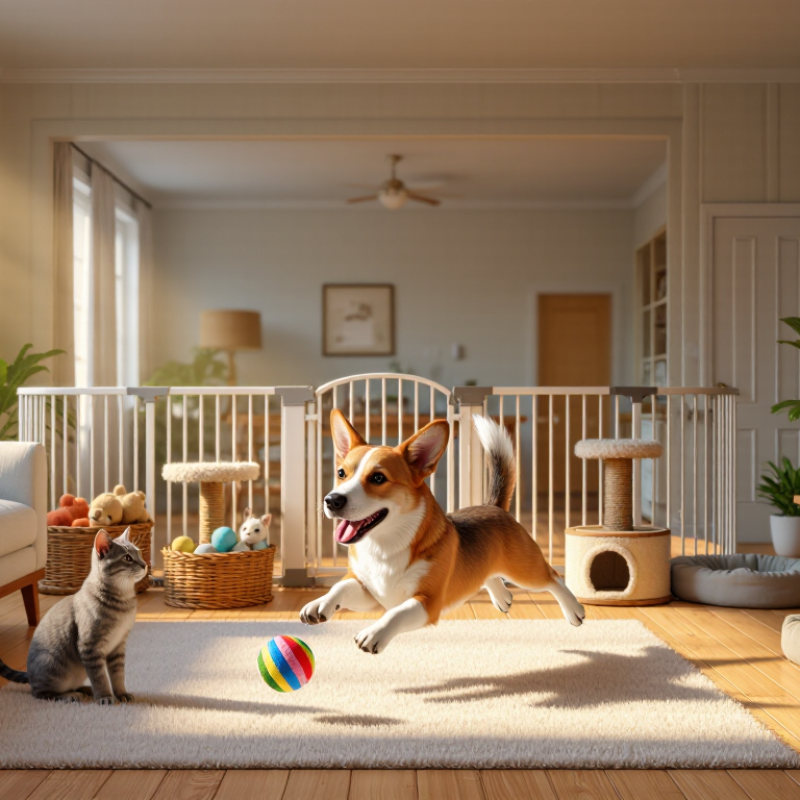
This guide introduces the Best Playtime Tips For Multi Pet Homes, using those principles in practical ways. Think of two short play zones, a closed baby gate, and separate toys for each animal. A ten-minute turn may work better than one chaotic group session. Watch for stiff bodies, tucked tails, flattened ears, or sudden silence. Stop early when signals change.
Perfect balance is unrealistic. Even experienced owners miss a warning sometimes. I have, too. The goal is not constant harmony. It is safer, calmer, and more rewarding play for every pet. These tips combine professional guidance with everyday observations from real multi-pet households.
7 Best Playtime Tips for Multi Pet Homes?
Assess Each Pet’s Temperament, Energy Level, and Play Style
Shared play should begin with observation, not excitement. Watch each pet during quiet moments and active games. Note who chases, who pounces, and who prefers gentle contact. A confident, fast-moving cat may overwhelm a cautious dog. An older pet may need slower games and longer breaks. Temperament matters more than size.
Match activities to individual needs. A scent-search game can suit a thoughtful dog better than rough wrestling. A short feather chase may satisfy a quick, agile cat. Keep toys separate when one pet guards resources. Use two play areas when necessary. Reward calm behavior near other animals. This teaches pets that sharing space can feel safe.
My early mistake was assuming tired pets would automatically play well together. They did not. Fatigue sometimes made one animal irritable and less predictable. Now, I watch body language closely. Stiff posture, pinned ears, repeated hiding, or hard staring means the game needs a pause. Never force interaction. A qualified veterinary behaviorist can help when tension continues or fighting seems likely.
Try parallel play, where pets enjoy different activities within sight of each other. Keep sessions brief at first. End while everyone remains relaxed. Record what worked, including time, activity, and each pet’s response. These notes reveal patterns that memory often misses. One pet may need daily movement, while another thrives on quiet mental challenges.
| Tip | Temperament to Assess | Energy Level | Play Style | Practical Playtime Approach | Safety Indicator |
|---|---|---|---|---|---|
| 1. Evaluate Each Pet Before Group Play | Look for confidence, fearfulness, sociability, and signs of guarding toys or space. | Compare activity needs instead of assuming all pets require the same amount of exercise. | Identify whether each pet prefers chasing, fetching, wrestling, chewing, or exploratory games. | Begin with short, supervised sessions and use separate play areas when personalities or abilities differ. | Relaxed bodies, normal movement, and voluntary interaction indicate comfort; hiding, freezing, or repeated avoidance means play should stop. |
| 2. Match Playmates by Energy and Size | Choose calm, tolerant pairings for sensitive pets and avoid forcing highly excitable animals to interact. | Pair pets with similar stamina, or provide breaks for the lower-energy animal. | High-speed chasing may suit energetic companions but can overwhelm a smaller, older, or cautious pet. | Use parallel activities, such as one pet fetching while another works on a food puzzle, when direct play is mismatched. | End the session if one pet repeatedly knocks down, corners, pins, or relentlessly pursues another. |
| 3. Introduce High-Value Toys Carefully | Watch for possessiveness around food, chews, balls, or favorite resting places. | Fast, competitive pets may become more intense when a highly desirable toy is present. | Some pets enjoy retrieving together, while others prefer individual chewing or scent-based enrichment. | Provide multiple similar toys and remove high-value items during early group sessions if tension develops. | Stiff posture, hard staring, hovering over an item, growling, or snapping signals that toys should be separated. |
| 4. Use Separate Routes for Chase Games | Consider whether a pet becomes overexcited by fast movement or has a strong chase response. | Rotate short bursts of activity with calm pauses, especially for pets that tire quickly or overheat easily. | Wand, flirt-pole, or ball games should allow each pet to chase without colliding with another animal. | Play in an open, uncluttered area and direct the toy away from furniture, stairs, and other pets’ bodies. | Stop for limping, excessive panting, coughing, stumbling, or difficulty recovering after activity. |
| 5. Build in Individual Play Sessions | Give shy, elderly, recovering, or easily distracted pets a setting where they can play without competition. | Adjust duration to the individual pet rather than using one fixed schedule for the entire household. | Rotate interactive play, training, sniffing, climbing, or puzzle activities according to preference. | Schedule one-to-one time daily when possible, even if group play appears peaceful. | A pet that engages more freely alone may need more private enrichment and less group pressure. |
| 6. Teach Calm Start-and-Stop Cues | Assess impulse control and the ability to disengage when another pet walks away. | Use brief play intervals followed by calm behaviors such as sitting, settling, or moving to a mat. | Alternate exciting games with low-arousal activities, including sniffing or simple reward-based training. | Pause play before excitement becomes frantic, reward calm behavior, and restart only when all pets are settled. | Pets should be able to respond to a cue, release a toy, and move away without conflict. |
| 7. Supervise, Observe, and Adjust | Review changes in tolerance, confidence, pain, or irritability, since behavior can change with age or health. | Reduce intensity during hot weather, after illness, or when a pet shows unusual fatigue. | Continue the activities that produce cooperative engagement and replace games that repeatedly cause conflict. | Keep sessions predictable, provide escape spaces, and separate pets whenever direct supervision is unavailable. | Seek veterinary or qualified behavior support for sudden aggression, repeated injuries, or persistent fear. |
Structure creates fair turns and reduces competition. Louder toys do not solve unequal energy levels. Short games work better.
Try name-and-turn, target touch, relay recall, and scatter search. Rotating puzzle stations, tug-and-trade, and calm settling also help.
Say one pet’s name before offering a reward. Rotate the starting pet regularly. The confident animal should not always lead.
Measure each portion before play. Leave wide spacing during scatter searches. Check that slower pets reach their areas safely.
Watch for stiff bodies, fixed staring, freezing, blocking, tucked tails, or sudden silence. Repeated staring matters. Pause before tension becomes obvious.
Keep sessions around five to ten minutes. Add water breaks and calm pauses. End while everyone still seems relaxed.
Offer separate toys when excitement rises. Do not force pets to share a favorite item. I once waited too long, and that was my mistake.
Give each pet a separate play area, mat, or puzzle station. Young pets may need active games, while older pets need gentler movement.
Yes. Give every pet daily one-on-one time, even for seven quiet minutes. Brushing can help a nervous animal feel secure.
Stop shared play if tension continues, injuries occur, or a pet hides afterward. A veterinarian or qualified behavior professional can assess the situation. Online advice can miss age, health, and temperament.
Creating a harmonious play routine in a multi-pet home begins with understanding each animal’s temperament, energy level, confidence, and preferred play style. The Best Playtime Tips For Multi Pet Homes include preparing a spacious, secure area with enough toys, resting spots, water, and room for every pet to move comfortably. Group play should be introduced gradually, beginning with short, supervised sessions and clear boundaries to prevent overstimulation or competition.
Seven structured games can encourage fair participation, such as gentle fetch, treat-free hide-and-seek, obstacle courses, toy rotation, follow-the-leader, target games, and calm chase alternatives. Activities should be adapted to each pet’s abilities, with shared play balanced by individual attention. Owners should watch body language closely, interrupt tense interactions early, provide regular rest periods, and separate pets when needed. With patience, consistency, and thoughtful supervision, playtime can become a safe and enjoyable way to build confidence, exercise, and positive relationships among all household pets.

 Creative Pet Toys